
What a row holds
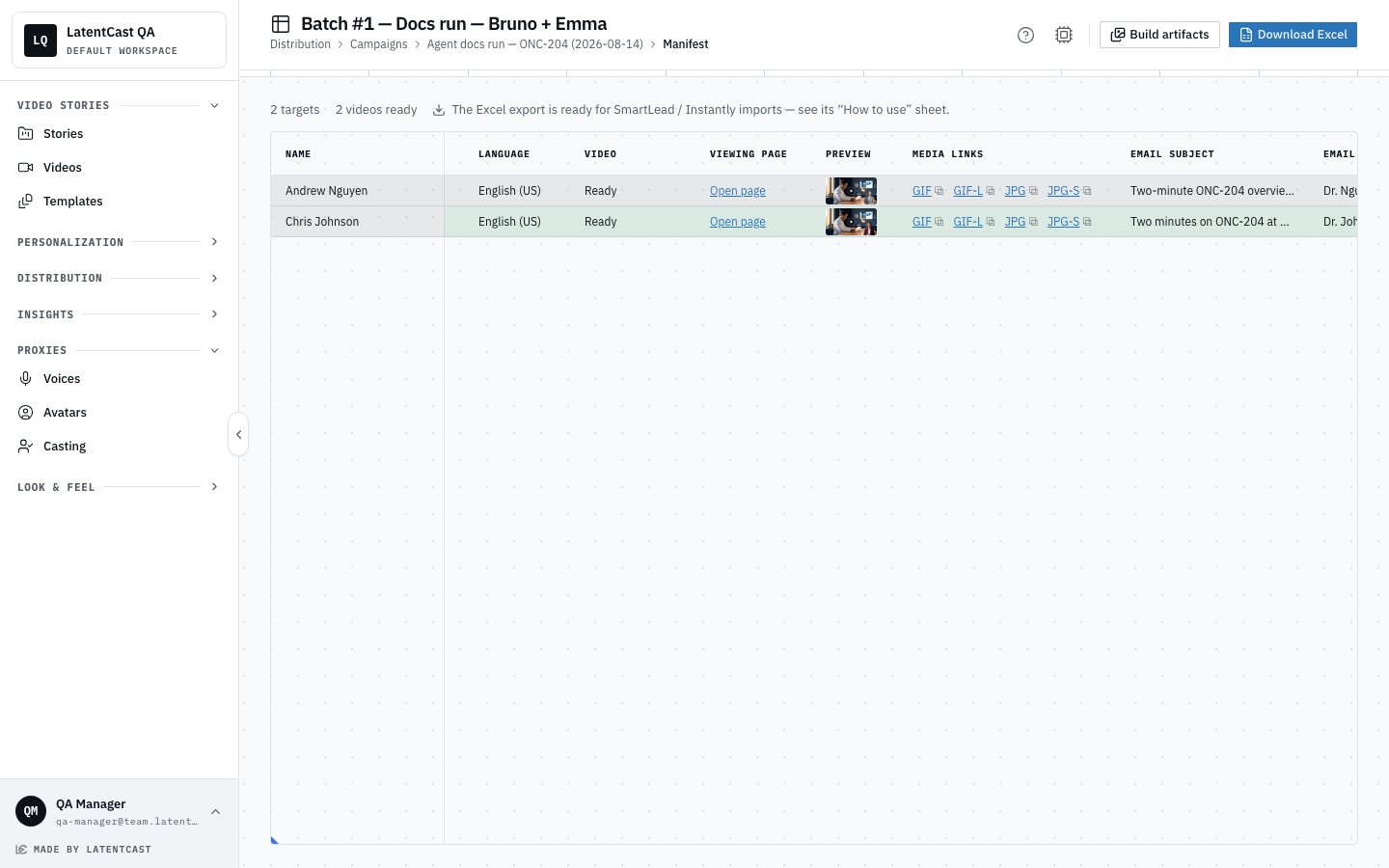
A finished manifest: the video, the page link, a preview thumbnail and the media links, each with a copy button.
The copy is a draft
Every piece of outreach copy is written for that specific person and signed by their own presenter, and every cell is editable. Click one and rewrite it. Your override survives a rebuild. Read a few before you send. The copy is good, and it is still worth your eyes on the ones going to people who matter.Getting it into your sending tool
Export downloads the manifest as a spreadsheet shaped for the common sequencing tools, with their column-name limits respected and every link in plain text so it can be dropped into a merge field. The intended flow is straightforward:- Export the manifest.
- Import it into your sending tool as a list.
- Build your sequence so it references each person’s page link, preview image and copy.
- Send.
Rebuilding
Assets are built automatically as the last phase of a run, and a batch is not complete until they are. Build artifacts rebuilds them by hand, which you would do after changing the frame anchor. Rebuilt media keeps the same links.Before you send
- The batch shows complete, with nothing left to retry.
- You opened two or three viewing pages from the manifest and watched them.
- You read a handful of the outreach messages and would put your name to them.
- The preview images look like something you would click.
Next
Viewing pages
The page each recipient lands on, and how to manage them.
Reviewing before you send
The gate that catches problems before this stage.